A life shaped by pain, willpower, and the construction of a public persona
The following article explores the life of Frida Kahlo, an iconic painter whose entire existence became a stage symbolizing struggle, pain, and creation. Born Magdalena Frida Carmen Kahlo, this Mexican painter later became part of the Surrealist movement, even though she claimed to paint her own reality. Her fragile health, marked from a young age by polio, profoundly influenced Frida's art and the way she observed Mexican society.
A pivotal year in her life was the car accident that left her severely injured, particularly in her spine and right leg, leading to months of hospitalization. This article goes beyond a brief description, exploring in depth Frida's life, her family background, her inspirations, her struggles, and the multifaceted nature of a Mexican artist who became a major figure in Mexican art.
Childhood, illness and first steps in a changing Mexico
Frida was a little girl born in Mexico City in a house not far from the Coyoacán neighborhood, a place now known worldwide as Casa Azul. Her mother, deeply rooted in Mexican culture, and her father, Guillermo Kahlo, an amateur painter and photographer of German origin, influenced her artistic development. The polio she contracted at the age of six left a lasting mark on her right leg, an element that would later appear in her paintings.
A student at the Escuela Nacional Preparatory, she developed a passion for science with plans to become a doctor before a serious accident changed her life. In September 1925, her bus collided with a tram, a serious accident that left her with severe injuries to her spine, pelvis, and leg. This period marked the beginning of her intensive portrait practice, as Frida Kahlo painted during her convalescence using a mirror fixed above her bed.
A tumultuous love affair and the building of an iconic duo with Diego Rivera
Her relationship with Diego began when she presented some of her early portraits to the painter Diego Rivera, already famous in the Mexican art world. This marriage, marked by passion, heartbreak, and the constant intertwining of their lives, became a significant part of the tumultuous life of the painter. Their union, sometimes punctuated by infidelity and periods of divorce, profoundly influenced her art.
Kahlo and Rivera formed a fascinating couple, observed by Mexican society and international figures in the art world. Frida and Diego lived, among other places, in the famous Blue House and the San Ángel house, both steeped in history. Their relationship with Diego was complex, but the young woman found in this volatile love an inexhaustible source of emotion, which she transformed into iconic paintings.
Political commitments and claimed cultural identity
Frida joined the Communist Party at a young age and became one of the leading women in the social struggle. Her circle included individuals like Leon Trotsky, whom she and her husband welcomed into the Blue House. Trotsky's presence in her life and the political milieu she frequented fueled her anti-imperialist views and her committed vision of Mexican society.
She participated in the Seminario de Cultura Mexicana and became a prominent figure in the political landscape of Mexico City. Her art was accompanied by a profound reflection on Mexican culture, Mexican heritage, and how identity is constructed through color, symbols, and history. Frida developed a powerful universe nourished by mythological, popular, and revolutionary references, particularly inspired by the Mexican Revolution.
The major works of Frida Kahlo, a painted autobiography
Her life is inseparable from her art. Every self-portrait, every scene symbolizing her physical pain or her romantic torments reveals what Kahlo was in her deepest intimacy. Her famous paintings are among the most studied works in the world, housed in the Museum of Modern Art and the Frida Kahlo Museum.
Frida's iconic paintings draw inspiration from her life, her fragile health, her love for Diego Rivera, and her observations of Mexican society. This style of painting makes her a central figure in Mexican art. Her compositions often feature elements from her environment, such as the Blue House, animals, fruits, or symbolic objects representing her identity.
Iconic works you absolutely must know
The Two Fridas is one of her most powerful and celebrated paintings , symbolizing the duality between the wounded girl and the strong young woman she wished to portray. Self-Portrait with Thorn Necklace represents her intimate pain and the image of an iconic artist facing her suffering with dignity. The Broken Column shows her bruised spine and expresses the violence of her repeated surgeries.
Henry Ford's Hospital is a painting deeply marked by her miscarriage during a medical stay. These iconic paintings perfectly illustrate her style and her art in a unique combination of poetry, stark realism, and imagination. They also depict the intimate scene of a girl, then a young woman, facing a tumultuous life.
The major themes of her work revolve around the body, identity, and impossible motherhood.
The depiction of her wounded body is a recurring motif throughout her work. Frida Kahlo paints an individual confronted with a succession of physical pains, particularly due to her spine and numerous surgeries. Her medical condition often leads her to represent her hospital room or elements symbolizing her fragile health.
The theme of impossible motherhood appears particularly in certain works depicting anatomical elements or scenes related to her miscarriage. Her paintings also address Mexican culture, female identity, psychological pain, and personal development within a changing society. This richness of themes explains why her paintings are studied in art schools, particularly at the Academy of Fine Arts and the National School of Art.
Where can I admire Frida Kahlo's works today?
A significant portion of Frida Kahlo's works are housed at the Frida Kahlo Museum, located in the Blue House in Mexico City. Others can be seen in prestigious venues such as the Museum of Modern Art or in international exhibitions that travel between Paris, New York, and San Francisco. Some rare and highly sought-after pieces fetch impressive sums at auction, sometimes even setting records.
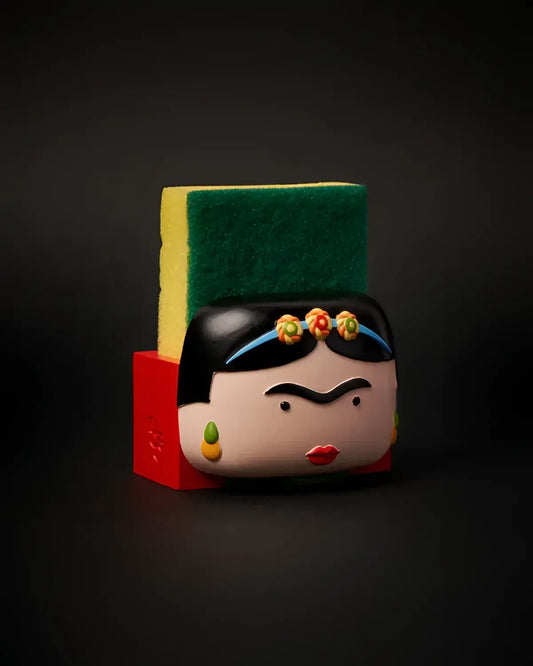
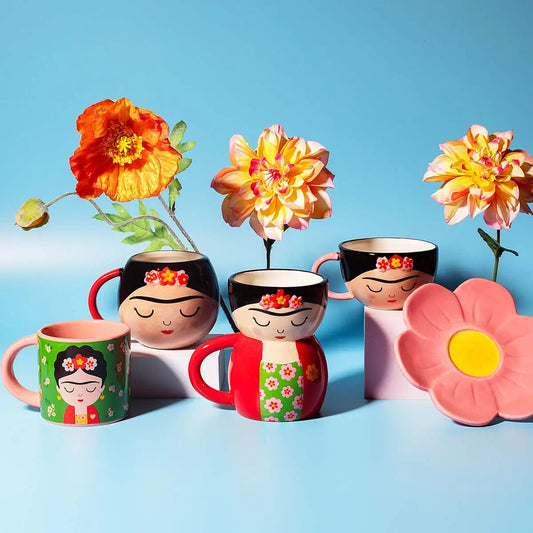
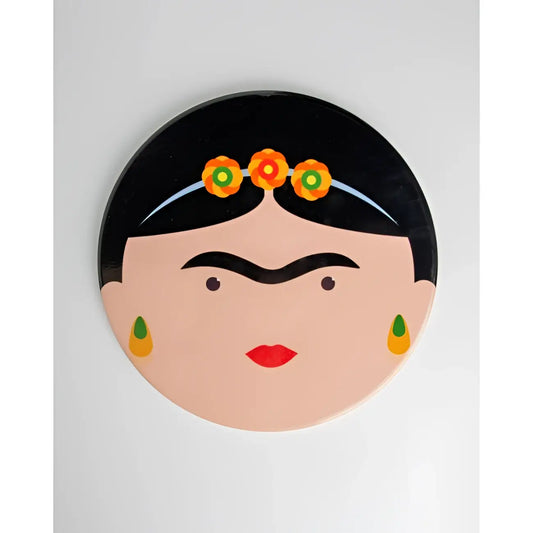
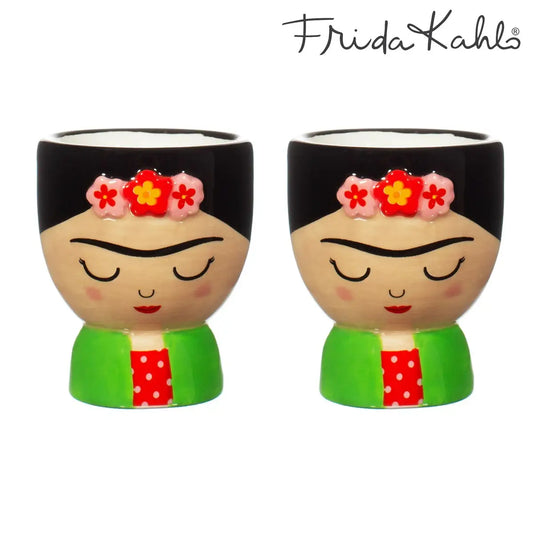
These famous paintings attract visitors from all over the world every year, eager to learn more about Frida's life and admire the power of her colors. The renown of her work continues to grow, even inspiring designers in fashion and interior design, notably at Forma Concept Store , the leading online concept store.
Frida Kahlo, a global influence spanning politics, feminism, and contemporary culture
Frida Kahlo became a central figure in feminism, largely due to her life filled with struggle and assertions of identity. Her experience as a young girl and then a young woman living in a patriarchal Mexican society inspired her to reflect deeply on the role of the individual in society. Her influence also extended to the political sphere in France, the United States, and many other countries.
Videos, documentaries, and films now chronicle Frida's life, demonstrating the enduring relevance of her Mexican legacy. Frida is also a key figure in modern Mexican culture and the New Mexican Art movement, which many contemporary artists embrace. Frida's art continues to inspire new generations who identify with her sincerity and resilience.
A pioneer in the representation of women in art
Frida emerges as one of the first artists to depict, without filter, a woman confronting her physical and psychological pain. Her self-portraits reveal the evolution of her condition, from a little girl with polio to a young woman severely injured in her serious accident, and finally to an iconic artist.
She addressed themes often considered taboo in her time, such as miscarriage, sexuality, and physical suffering. This way of painting her body became a political act, particularly in a Mexican society marked by strict norms. Her approach had a lasting influence on how women represent themselves in contemporary art and inspired schools from Mexico City to Paris and New York.
Contemporary inspiration between fashion and cinema
The image of Frida Kahlo, with her hairstyles and clothing typical of Mexican culture, greatly fascinates contemporary designers. Her fame transcends fashions, eras, and borders, inspiring galleries like Galerie Montblanc as well as interior design brands like Forma Concept Store .
Cinema has regularly captured her life story in films and documentaries that showcase her intense personality. Numerous videos about her life circulate online, allowing a wide audience to enter her world. This constant inspiration further enhances her global status and underscores the power of her message.
Frida Kahlo in academic research
Frida Kahlo is the subject of numerous academic works in the fields of art, culture , and sociology. Researchers such as Hayden Herrera have published detailed works outlining her life, family background, and artistic inspirations. Her works are studied in schools such as the Academy of Fine Arts, the National School, and in programs dedicated to Mexican art.
His connections with figures like André Breton and Leon Trotsky are also the subject of historical research. The depth of his art and the rich symbolism of his iconic paintings offer an inexhaustible field of study. This academic attention testifies to the universal reach of the painter .
Remarkable anecdotes, the woman behind the legend
Frida's life is full of anecdotes that reveal a vibrant and passionate personality . Some tell of how the young girl would spend hours observing her reflection in a window (see the website or another window, see), seeking to understand her emotions in order to paint better. Others evoke her ability to transform even the most painful moments into creative elements.
Her time spent between Mexico City, San Ángel, New York, and San Francisco enriched her worldview. She often surrounded herself with artist, activist, and intellectual friends, creating a stimulating environment. These anecdotes offer a glimpse into the life of a courageous woman who underwent multiple surgeries while continuing to create her paintings.
Seven surprising and little-known facts
Frida Kahlo was born in July and died in July 1954 after a life marked by numerous major surgeries. A famous anecdote recounts how she changed her birth year to align it more closely with the Mexican Revolution, which she deeply admired. At Henry Ford Hospital, she experienced the pain of a miscarriage, an event she transformed into a pictorial scene.
She also welcomed Leon Trotsky into her home, strengthening her commitment to the Communist Party. Her love for Diego endured periods of divorce, reconciliation, and shared creative work. Severely injured from a young age, she found in the time she spent painting a way to rebuild her identity. Some days, despite the pain, she strove to move forward, symbolizing exceptional resilience.
Frida Kahlo the entrepreneur, managing her image and building a brand
Frida understood early on the importance of controlling her image in a society where the visibility of a female painter remained precarious. She developed an immediately recognizable style characterized by vibrant colors, hairstyles rooted in Mexican culture, and iconic dresses. With her paintings and with Rivera, she created a coherent visual universe that influenced how Mexican art was perceived worldwide.
This intuitive strategy made her one of the first women to actively manage her public image. Her legacy continues to inspire modern brands like Forma Concept Store, which value visual and cultural identity .
The birth of a living brand between instinct and intention
The Blue House became a powerful symbol associated with her personality, serving as both an intimate space and an artistic haven. Frida created self-portraits that portrayed her as a resilient young woman facing the challenges of daily life. Her style of dress, rooted in her cultural heritage, attracted the attention of numerous artists, photographers, and intellectuals. Through collaborations with Diego and public appearances, she forged a memorable identity. This visual construct significantly contributed to the enduring power of her image.
The art market and its soaring value
The Mexican artist's celebrated paintings regularly reach record prices on the international market. Each sale attracts collectors, fascinated by the intensity of her art, her tumultuous life, and the unique stories behind her works. Some recent auctions have even set a world record for a painting by a female artist.
This increased value is explained by the scarcity of available works, the emotional power of each portrait, and the growing fascination with Mexican art. The international market, from Mexico City to Paris, New York, and San Francisco, continues to place Frida among the most sought-after artists .
Posthumous exploitation: between rights and controversies
After her death, managing her legacy became a complex issue. Her house, now the Frida Kahlo Museum, attracts thousands of visitors each month, eager to discover her bedroom, her studio, and the objects of her daily life. Her image is subject to licensing agreements, sometimes controversial, that use her face to symbolize strength, freedom , or femininity.
The question of exploiting her name sparks debate in Mexican society and beyond. Despite these controversies, her art continues to resonate with audiences and inspire new generations of artists. This powerful legacy demonstrates that her life transcends mere biographical narrative.
Why does Frida Kahlo continue to fascinate?
The enduring fascination with Frida Kahlo stems from the unique combination of her physical suffering, political activism, and artistic creation. Her complex identity, shaped by her serious accident, her marriage, and her inner struggles, still resonates with a wide audience today.
Her ability to transform pain into emotional power, her embrace of nonconformity, and her deep connection to Mexican culture created a unique universe. Frida's influence extends to contemporary New York, where she remains a major figure in Mexican art. Her timeless message inspires both young artists and art enthusiasts seeking to understand Mexican society and its evolution.
An artist who transforms vulnerability into strength
Frida Kahlo painted pain as a language, transforming her wounds into artistic tools. Her art became a way of affirming the inner strength of the individual in the face of life's trials. Her depictions of the female body broke the aesthetic codes of her time and revealed the reality of suffering.
The themes she addresses deeply resonate with those going through difficult times or seeking to build their identity. This approach makes her a figure of courage and freedom who has left a lasting mark on art history.
An identity model for young people
Many young people see Frida as a figure who embraces her difference and doesn't hesitate to depict her emotions with sincerity. Her way of painting a wounded young girl and then a strong young woman embodies a model of self-affirmation. She shows how to transform difficulties into meaningful creations.
His influence can be seen in fashion, visual arts, and even in some of the decorative objects offered by Forma Concept Store. This continuity proves the power of his message and the relevance of his legacy.
An instantly recognizable and powerful aesthetic
The vivid colors, symbolic compositions, and frontal portraits create an instantly recognizable aesthetic. The Broken Column, The Two Fridas, Self-Portrait with Thorn Necklace, and numerous other iconic paintings demonstrate the consistency of her style. This unique visual language has helped build a global icon whose influence continues to grow.
Frida Kahlo developed an artistic identity that remained deeply rooted in Mexican culture while also being universal. This rare combination explains why her work continues to resonate with so many people around the world.




 -10%Sale
 -10%Sale
 -10%Sale
 -10%Sale
 -10%Sale
 -10%Sale